
Y Solve Capital operates at the intersection of social impact financial innovation, portfolio company weighted average cost of capital, and impact investor portfolio construction and management.
Our broader, and admittedly audacious, vision is that not only is more capital allocated to impact investing but that impact is integrated as a portfolio lens throughout all investing activity.
2nd Leg of Humanistic Capitalism
Delivering catalytic capital to support Lab portfolio companies that develop and deploy emerging technologies to drive positive social impact at scale.
Traditional financing structures often prioritize short-term return expectations in ways that may constrain a company’s ability to optimize long-term growth, operational development, and scalable impact.
Y Solve Capital seeks to address this challenge through financial innovation designed to better align investor expectations, company sustainability, and long-term value creation.
Thematic Impact Investing
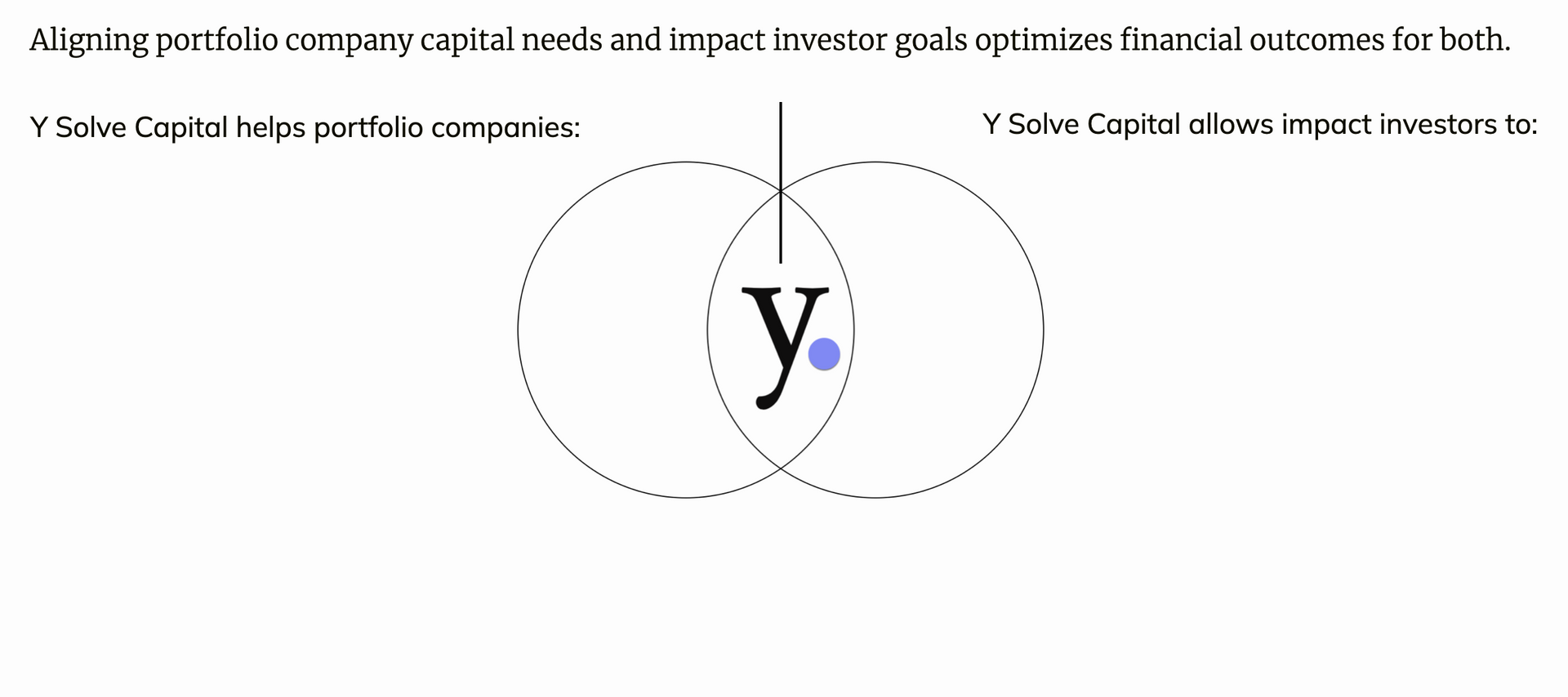
Thematic Impact Investing focuses on long-term trends that are reshaping society, industries, and economies. Examples include artificial intelligence, bot-to-bot economies, quantum computing, robotics, and other transformative forces. Thematic Impact Investing is a contraction of Themes (emerging technology and other disruptive trends) and Areas of Impact (where we drive social change).
Bringing financial innovation to the impact investment sector, our goal is to be a progenitor of Thematic Impact Investing that uses focus on emerging technologies to generate above-market return and support solutions capable of creating meaningful and scalable change.
There is an orthodoxy that suggests financial return and social impact are competing objectives. We disagree.
Our goal is to generate returns that exceed those from other alternative investment opportunities while creating measurable social impact at the same time.
This is possible because Y Solve Capital works in partnership with Y Solve Lab.
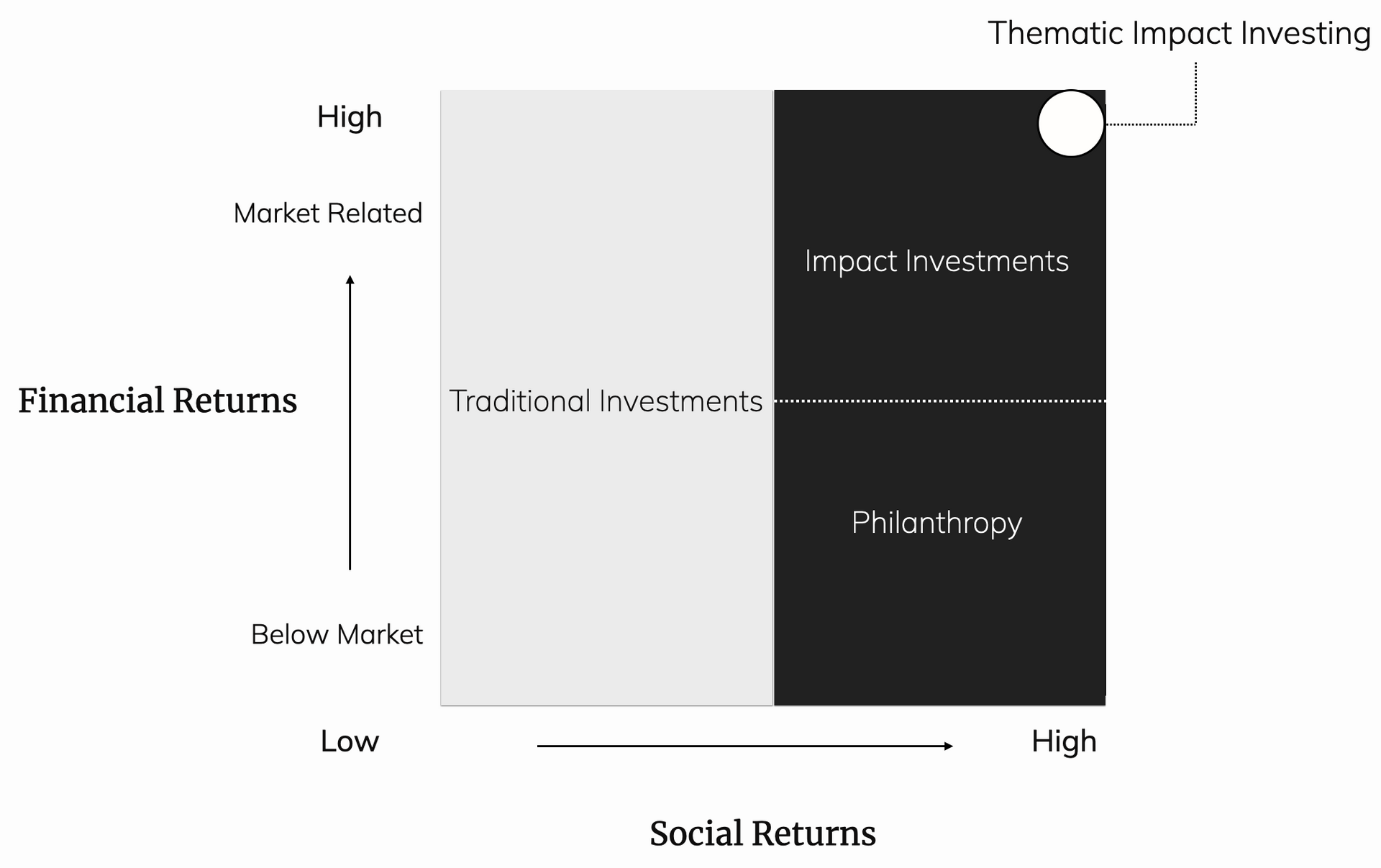
Y Solve Lab's systematic new venture creation process reduces early-stage risk, validates market opportunities, and builds companies designed for scalable impact. In addition, our portfolio includes multiple economic company types that improve the capital efficiency of the overall portfolio.
Y Solve Capital then develops innovative investment structures that allow investors to structure portfolios that match their desired return and risk profiles.
The result is an approach designed to generate above-market financial returns, measurable social impact, and a more resilient portfolio than traditional early-stage venture creation activities.
Impact as a Lens
There are underlying secular trends that support greater capital allocation to impact investment.
Shifting Investor Demands
- Generational Wealth Transfer: Millennials and Gen Z are prioritizing values-driven investments, forcing family offices and wealth managers to adopt strategies that push beyond traditional profit-seeking.
- Institutional Adoption: Pension funds and institutional foundations are leveraging their endowments to directly support long-term sustainability goals.
- There is growing attention to
address systemic risks through impact investing. Climate change, biodiversity loss, and social inequality are increasingly understood as material financial risks, blurring the line between impact considerations and prudent financial outcomes.
As a result, there is a growing narrative about Impact being an emerging asset class. That classification misses the mark.
In order for products and strategies to be considered as an asset class, they should meet the following criteria:
- Homogeneity: Assets within the class must share highly similar economic characteristics, risk profiles, and return behaviors.
- Mutually Exclusive: Individual assets should not belong to multiple classes at the same time.
- Diversification: The class must possess a low correlation (and sometimes negative correlation) with other asset classes to aid in portfolio diversification.
- Investable Universe: The class as a whole should represent a meaningful portion of global investable wealth and be readily accessible to investors.
- Market Depth: The assets must trade in broad, deep markets with enough capacity and liquidity to absorb meaningful allocations without extreme price distortion.
The most common traditional asset classes are equities, fixed income, and cash and cash equivalents. Institutional investors and multi-asset managers often use a wider opportunity set that also includes real estate, commodities, infrastructure, private equity, private credit, hedge fund strategies, currencies, derivatives, and other alternative investments. There is no universal classification system: a category may be treated as an asset class, a sub-class, an investment strategy, or an implementation vehicle depending on the investor.
Impact investing does not meet the criteria to be considered an asset class. But rather,
we believe impact investing should be considered a Lens that is considered across all investments.
Our Approach
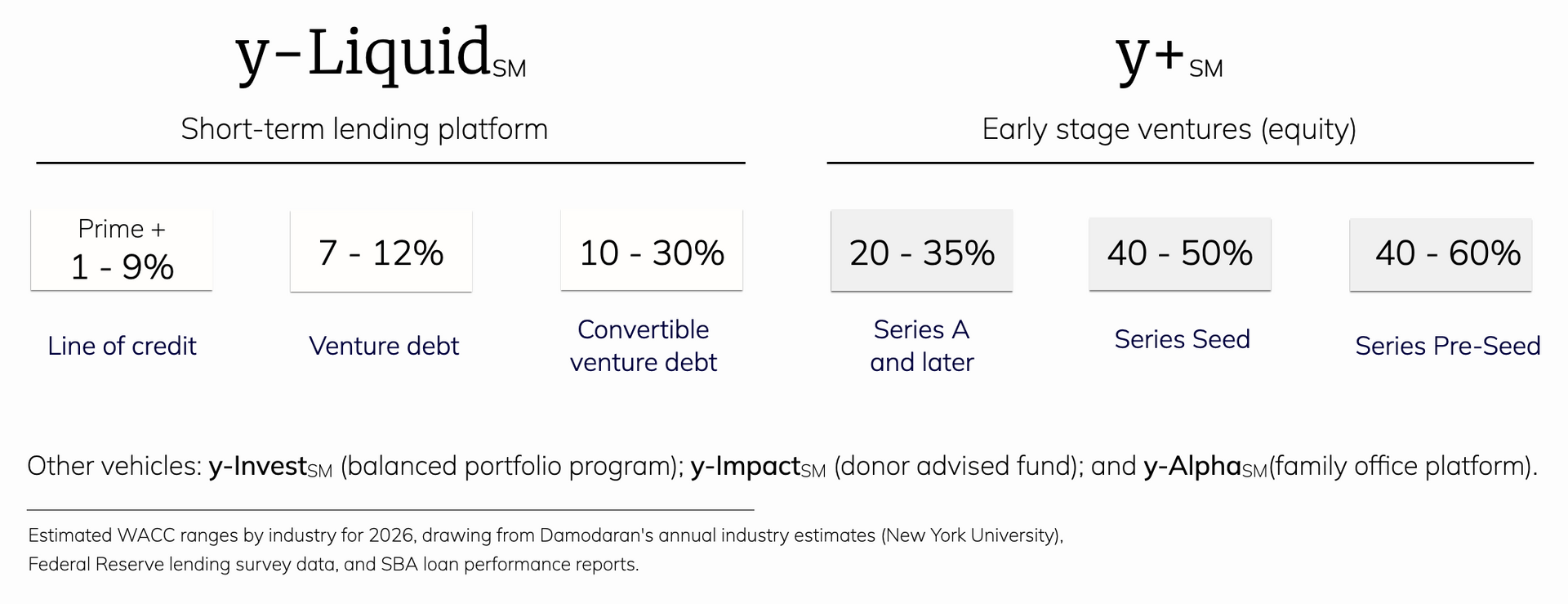
A goal of Y Solve Capital is to provide investors nominal, and risk-adjusted, financial returns greater than what they can receive from alternative asset classes.
Our approach to Thematic Impact Investing seeks to seed, scale, and sustain Lab portfolio companies based on 4 core tenets:
Impact Portfolios
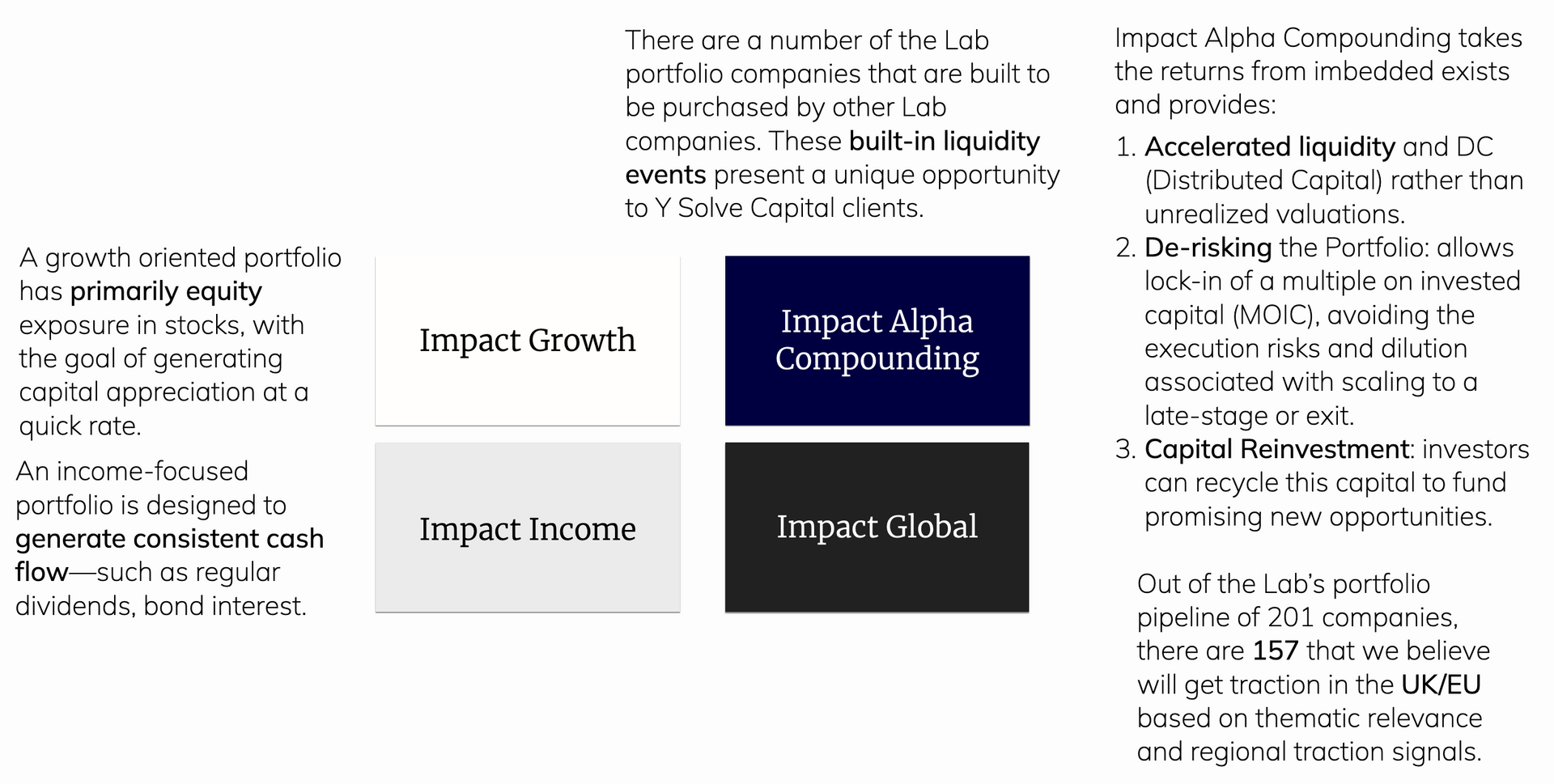
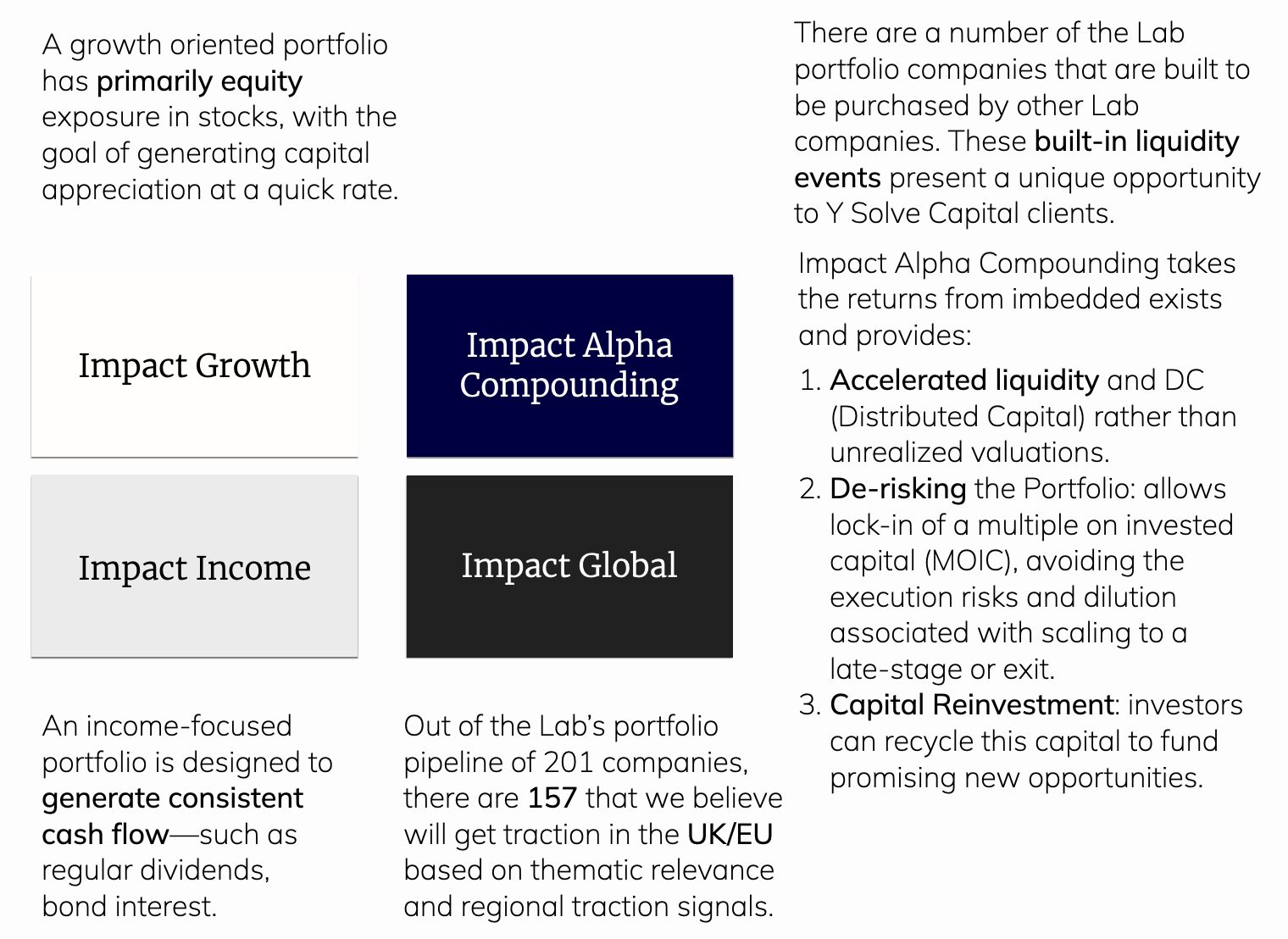
Impact model portfolios are built in a variety of styles to help investors reach their portfolio goals, and can be customized to a client’s risk profile.
Within model portfolios, investors are able to refine exposure across a number of criteria to meet their impact and financial goals. Impact criteria: area of impact, themes, geography, and target impact group. Financial criteria: return, risk, and duration.
Model portfolios include:
Impact Income,
Impact Growth,
Impact Alpha Compounding, and
Impact Global.
We got it.
Thank you for contacting us. We’ll get back to you as soon as possible.
Thematic Impact Capital.
All Rights Reserved
Y Solve Lab, Inc.
Y Solve Capital, Inc.
Y Solve Foundry